
Most days, somewhere in the middle of everything, I hit a moment of panic. Not the debilitating kind. It’s more of a “what am I going to do” panic, and when it shows up, part of me wants to check out and go find something fun instead. There’s a real pull to drive home and get back in bed, or just go for a drive and get away from all of it.
Have you ever felt that? Or maybe it runs the other direction for you. Maybe you feel an intense urge to fix the thing right now, so strong it makes you dive in hard and get aggressive about it.
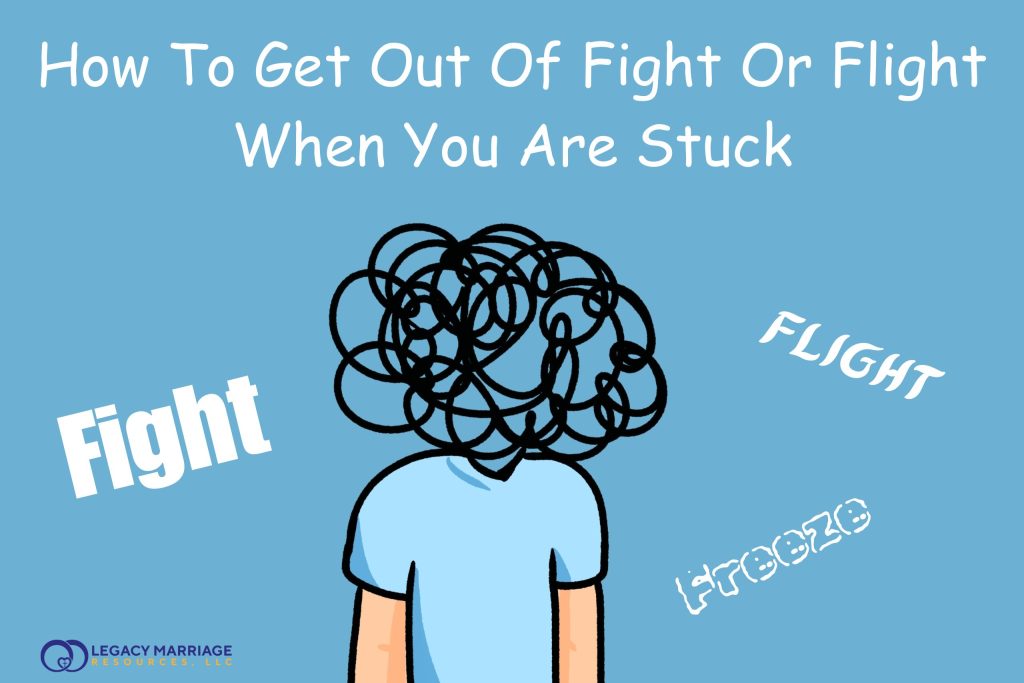
You’ve heard of fight or flight. Most of us know what it is and what it feels like. What we don’t know is how to get out of fight or flight once we’re stuck in it. All of us deal with some kind of anxiety or fear that shows up in certain situations. We can’t really help it. We overreact, or sometimes we under-react, and most of us don’t love how we land either way. Somewhere along the line, freeze got added to the list, too. Fight, flight, or freeze. So what’s the solution to handling this well?
Think about how people respond after a natural disaster. Some kick straight into service mode and help everybody they can reach. Others aren’t sure what to do or how to help, so they sit and wait. Others panic. Whatever your reaction was, you probably have some feelings about it, good or bad.
I’m not telling you any of those reactions are wrong. But whatever you think about how you handle pressure, I want you to be able to do better the next time you’re in a hard spot. So let’s talk about how to get unstuck, no matter which way you tend to go.
What is fight or flight?
Any day can turn stressful depending on what shows up. Today I had a pile of work waiting that had nothing to do with seeing clients. Deadlines are close and I already feel behind. And I’ve got six clients on my schedule. That’s usually a full day right there, with not much room left for anything else.
That builds anxiety in me, because it feels like there isn’t enough time to get it all done. Even something that small trips my fight or flight system. My nerves climb, and part of me wants to check out. Some days I feel motivated, and I fight to get through the list. Other days, I don’t know what to do first, and that’s a mental freeze. It happens to all of us, in small ways and big ones.
When something stressful hits, most of us go one of three ways. You fight, which means you jump in to fix it or solve it. You flee, which means you pull back and hope it resolves itself. Or you freeze, where you mostly do nothing and wait, because you’re stuck and can’t focus enough to decide. None of those is automatically bad. They’re just not always the most helpful way to meet what’s actually in front of you.
So let me help you understand what’s going on inside you. You have a biological system in your body that helps keep you alive when something critical comes up. The Cleveland Clinic describes the autonomic nervous system as the network of nerves running all of your body’s automatic functions, the ones that keep going whether you’re awake or asleep, like breathing and your heartbeat. It’s part of how God designed you to stay alive.
There’s a part of that system that really kicks in when things get tense, called the sympathetic nervous system. Harvard Medical School compares it to “a gas pedal in a car.” It triggers the fight or flight response and floods your body with a burst of energy so you can deal with whatever looks like danger. I think back to running track in high school. Right before a race, I’d get jittery and wired. My heart rate climbed. More blood was pumping to my legs, my arms, my hands, my brain, all of it getting me ready to perform. I was built to run. Not to run away, just to run. That same surge can show up when we fight. It’s your body trying to protect you, and God gave us that function without us having to control it. It can also be really frustrating when it overreacts.
So what do you do when you get stuck?
The first problem with fight or flight is that you’re usually in it before you realize it. So the work starts with awareness. You have to practice paying attention to your emotions and what sets them off, the situations and people that tend to do it. The more you can catch what you’re feeling, the more you can actually do something with it.
A lot of times, the first place to notice it is your body. Emotions show up there before we put words to them. Your shoulders climb toward your ears when you’re anxious or angry. Your stomach turns, and your chest goes tight. Sadness can sit in your throat as a lump, or leave your arms and legs feeling heavy. Anger heats up your face, and you might catch your hands balled into fists.
I’ll be honest with you, noticing my body has never come easily to me. I’ve had to learn it. I remember getting a bill for a service that was a lot more than I expected. I was angry, and I wanted to call the person right then and tell them how wrong they were. Looking back, I think a lot of that was tension I was carrying in my neck and head. I just wasn’t reading it at the time.
Here’s what helped. I took a moment and actually named it. The anger was really fear, fear of paying that much, and hurt, because I didn’t think this person was going to charge me the way they did. I took a deep breath. I reminded myself that I’m safe and that God knows what I need. I decided not to make the call and to leave it in His hands. And I felt calmer, even though nothing about the bill had changed.
That’s what I want you to practice. Name the emotion, then look underneath it for what’s really there. Most of the time, anger is sitting on top of fear or hurt. Once you’ve named it, you can check the thought that came with it. Is it actually true? If it isn’t, trade it for one that is. “I’m safe” was truer than “I have to fix this right now.”
Set yourself up before the hard moment
It also helps to know your triggers ahead of time. If you already know what tends to set you off, you can think through your best response before you’re ever in the moment.
I see this with a lot of the couples I work with. One spouse needs to bring up a hard topic, and they already know how it’s likely to go. They know the response will probably leave them feeling dismissed, disconnected, and hurt. But they also know the conversation has to happen anyway. So instead of walking in and just reacting, they prepare. They think through how to say their part in a way that gives their spouse the best chance to actually hear it. They plan for the hard response too, what they’ll do if it lands the way they expect. Sometimes that’s stepping out of the room to gather themselves and pray, asking God to help them stay calm and loving. Sometimes it’s deciding ahead of time to pause, take a breath, and work to understand what their spouse is saying instead of firing back.
None of that makes the conversation easy. But they’re not walking in cold and reacting on the spot. They know what they want to say, and they know how they want to handle themselves if it goes the way they’re afraid it will.
It’s also worth asking someone close to you what they notice about how you react. Sometimes they can see the pattern before you do.
Calming techniques are worth learning, too. Box breathing, grounding exercises, counting, a slow, deep breath like the one I took, whatever helps your body reset. The catch is that they work best when you’ve practiced them before the hard moment, not for the first time in the middle of one. It’s like anything else. The more you practice, the easier it is to drop into a calmer state when you need it.
And sometimes you just need another person. Tell someone what you’re feeling and thinking while you’re in it. Saying it out loud to someone safe can take some of the air out of it, and they can help you see whether the thought you’re believing is even true.
You’re not stuck for good
Nobody likes feeling stuck like this. It’s scary, and it can wear on you until it starts to feel hopeless. But you’re okay. This isn’t a hopeless spot. You can learn and grow here, because that’s how God made you.
Learning a few new strategies and getting to know your own body a little better is a real first step. If you want help with that, or you’ve been trying on your own and it isn’t holding, reach out to our office. We work with people across Augusta, Evans, and the CSRA, and we’d be glad to get you set up with one of our counselors. You don’t have to white-knuckle this on your own.
Brandon Coussens, LMFT
Brandon Coussens is a Licensed Marriage and Family Therapist and owner of Legacy Marriage Resources, LLC based in Augusta, Georgia. He specializes in marriage counseling and sex therapy. You can schedule a counseling appointment with him through Legacy Marriage Resources. He also offers Christian Coaching, Marriage Coaching, Financial Coaching, and Life Coaching to those who live outside the state of Georgia.
