
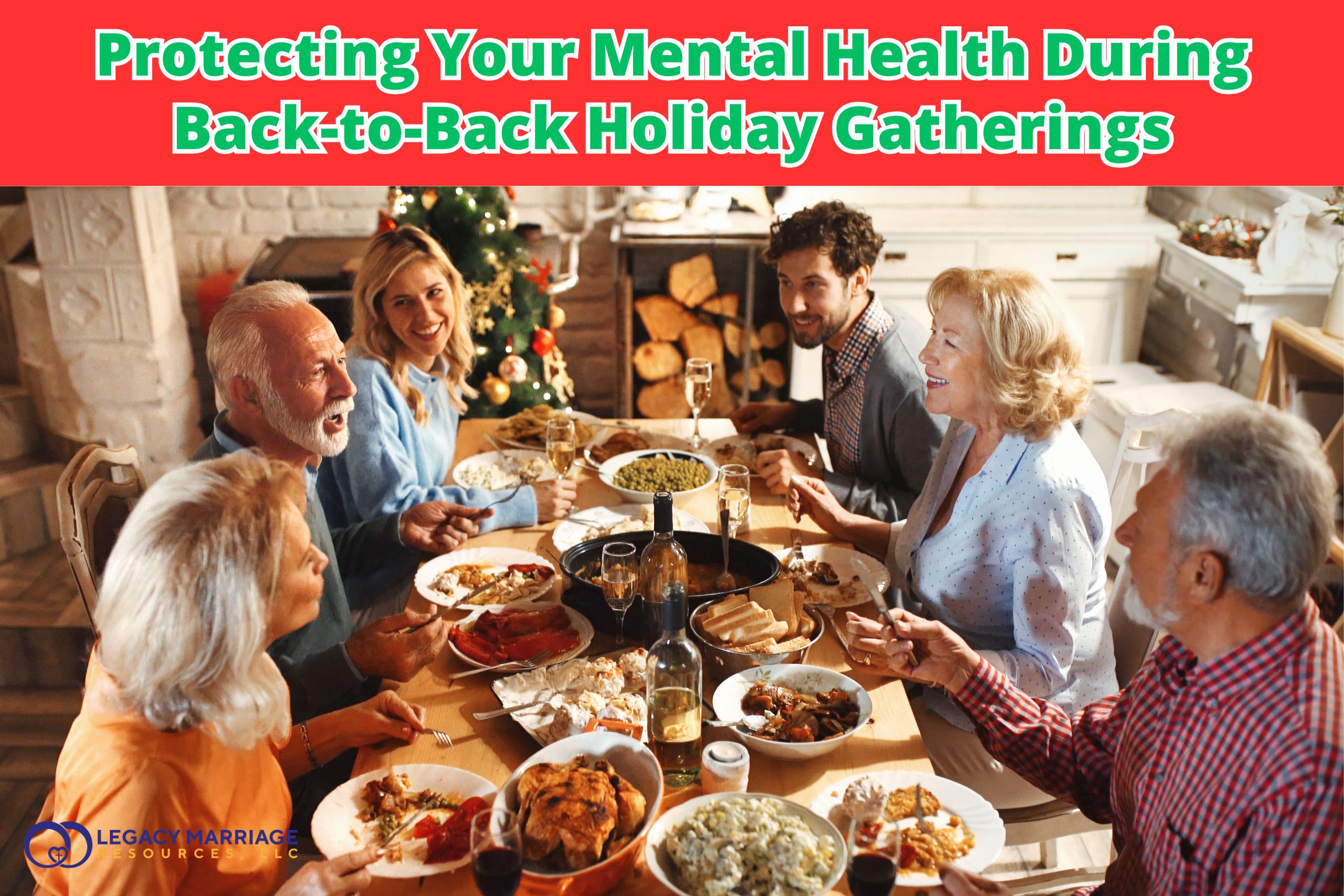
For many people, the holidays are portrayed as a season of joy, connection, and celebration. In reality, they can also be one of the most emotionally taxing times of the year, especially when your calendar is filled with back-to-back family gatherings, social obligations, and expectations. While spending time with loved ones can be meaningful, too much togetherness, too little rest, and unresolved family dynamics can quickly take a toll on your mental health.
As the Christmas season continues, many of our clients share what the holidays have been like for them in the past. Some couples struggle with conflict over where and how to spend time. Others feel overwhelmed by the constant “go, go, go” pace and realize they barely spent meaningful time together at all. And for many, the holidays stir grief and the pain of missing loved ones.
If you find yourself feeling drained, irritable, anxious, or overwhelmed during the holidays, you are not alone. Protecting your mental health during this season isn’t about opting out of connection. It’s about engaging in it in healthier, more sustainable ways. These experiences aren’t random. There are clear reasons the holidays take such an emotional toll.
Why Holiday Gatherings Can Be So Draining
Holiday gatherings are rarely just about food and festivities. They often come loaded with emotional history, unspoken expectations, and social pressure. For many individuals and families, these gatherings can trigger:
- Unresolved conflicts or past hurts
- Grief over losses or changes in your life
- Pressure to always appear happy or grateful
- Overstimulation and lack of routine
When gatherings happen back-to-back, sometimes across multiple households, there is little time to emotionally reset. Even positive interactions require energy. Without intentional care, emotional and physical exhaustion can quietly build.
Give Yourself Permission to Have Limits
One of the most important steps in protecting your mental health during the holidays is acknowledging that you have limits, and that having limits does not make you selfish or ungrateful.
Many people feel obligated to attend every event, stay for long periods of time, or meet everyone’s expectations of them. This mindset often leads to burnout. Instead, consider reframing the idea of setting boundaries as a form of self-respect and relational health with your friends and loved ones.
Healthy boundaries might include:
- Attending fewer gatherings rather than all of them
- Arriving later or leaving earlier
- Saying no to additional commitments when you’re already stretched thin
- Taking occasional breaks during events to step outside or into another room
Boundaries allow you to show up more present and emotionally regulated, rather than resentful or depleted.
Plan for Emotional Triggers Ahead of Time
Holiday gatherings often bring predictable stressors. A certain relative may make intrusive or harsh comments. Specific conversation topics may lead to tension between people. You may notice increased anxiety in crowded, noisy, or otherwise overstimulating environments.
The best way to approach these triggers isn’t just hoping they won’t appear, but instead planning for them as if they will.
Ask yourself:
- What situations typically drain me the most?
- Which conversations tend to escalate my emotions?
- What emotions do I usually feel after a gathering?
Once you identify patterns, you can prepare coping strategies such as:
- Changing the subject or disengaging from triggering conversations
- Setting limits on sensitive topics ahead of time
- Having an “exit plan” if emotions become overwhelming
- Grounding techniques like slow breathing or brief mindfulness exercises
Preparation doesn’t mean you are expecting the worst. It simply means that you are taking care of yourself.
Protect Your Energy Between Gatherings
When events are scheduled close together, what happens between them matters just as much as the gatherings themselves. Without intentional downtime, your nervous system may never have a chance to recover.
Consider building in:
- Quiet time alone, even if it’s brief
- Gentle movement, like walking or stretching
- Adequate sleep and regular meals
- Time away from screens and social media
Resist the urge to push through exhaustion. Emotional resilience depends on rest, not endurance. Giving yourself intentional time to relax and de-stress helps you to be more engaged in your next gatherings and to enjoy them more.
Release the Pressure to Be “On”
Many people feel an unspoken pressure during holiday gatherings to be cheerful, agreeable, and emotionally available at all times. This pressure can be especially heavy for those struggling with anxiety, depression, grief, or family stress.
You are not required to perform happiness.
It’s okay if:
- You’re quieter than usual.
- You need time alone.
- You don’t feel festive.
- You experience mixed emotions during this season.
Allowing yourself to show up authentically, rather than perfectly, reduces emotional strain and increases self-compassion.
Navigate Family Dynamics with Intention
Family gatherings can intensify long-standing dynamics, especially when roles and expectations go unexamined. If you notice yourself reverting to old patterns, gently remind yourself that you are allowed to respond differently now.
You might:
- Choose not to engage in arguments you’ve had many times before.
- Limit how much personal information you share.
- Validate yourself internally rather than seeking external approval.
- Stay grounded in your values rather than reacting automatically.
Changing dynamics doesn’t require confrontation. It often begins with awareness and intentional responses.
Lean on a Support System
Protecting your mental health doesn’t mean doing everything alone. Sharing your experience with a trusted partner, friend, or therapist can help you process emotions and feel less isolated.
If you’re attending gatherings with a spouse or partner, consider checking in with each other occasionally with questions like:
- What support do you need during or after events?
- How can we help each other decompress?
- What boundaries do you want to hold together?
Feeling supported can significantly reduce emotional fatigue.
Know When to Ask for Professional Help
If holiday stress feels overwhelming or begins to impact your mood, sleep, relationships, or sense of well-being, therapy can be a valuable source of support. If Christmas is already a day or two away, you may have difficulty finding a therapist immediately. Remembering what holidays are like for you will help you prepare next year to meet with someone before the holiday arrives.
However, contrary to common belief, you don’t need to wait until January to seek help. Many people benefit from starting therapy during the holiday season, when stressors are most present or noticeable. At the very least, taking the first step to call and schedule an appointment relieves some stress because you are taking action.
A therapist can help you:
- Set healthy boundaries.
- Process family dynamics.
- Manage anxiety and emotional overload.
- Navigate grief or transitions.
- Develop coping tools for future gatherings.
A Gentler Approach to the Holidays
Protecting your mental health during back-to-back holiday gatherings isn’t about avoiding people or dampening the celebration. It’s about honoring your emotional needs, respecting your limits, and approaching the season with greater intention.
This holiday season, consider asking yourself not just, “How can I do it all?” but “What do I need in order to be well emotionally, mentally, and physically?”
Your mental health is worth protecting during the holidays and beyond.
