
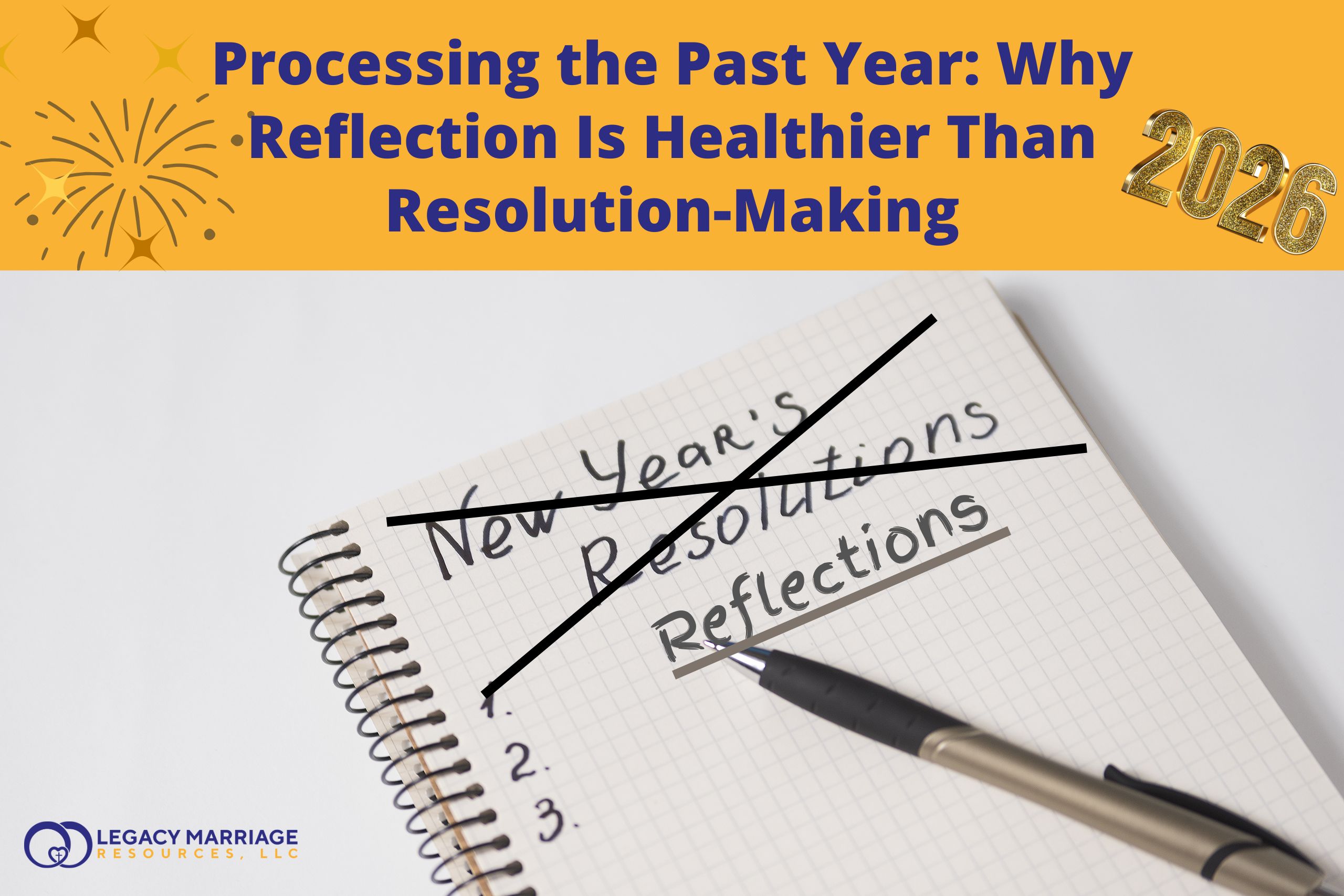
As the new year approaches, many individuals, couples, and families feel pressure to make resolutions.
“This year will be different.”
“We’ll communicate better.”
“I’ll finally get it right.”
While these intentions are often sincere, resolution-making can unintentionally create stress, shame, and unrealistic expectations—especially when emotional wounds from the past year remain unaddressed.
Personally, I’ve struggled with New Year’s resolutions for a long time. I don’t like the idea of failure. It bothers me. For years, I would set goals, start strong, and feel good when I followed through. But when I didn’t, when I lost momentum or fell short, I often became frustrated with myself, sometimes even hopeless.
Looking back, I began to question how healthy it really was to carry constant expectations, fall short of them, and then beat myself up for it.
Not too many years ago, I shifted my mindset. Instead of focusing on what I needed to change in the new year, I began reflecting on the year that had just passed and what it had revealed about my needs, limits, and growth.
From a therapeutic perspective, reflection is often far healthier and more effective than jumping straight into resolutions. Reflection allows space to acknowledge what has happened, how it has impacted us, and what we truly need moving forward. Before deciding where you want to go, it’s important to understand where you’ve been.
Why New Year’s Resolutions Often Create More Stress Than Growth
New Year’s resolutions aren’t inherently bad. The problem is that they often focus on outcomes without understanding. They emphasize change without first making room to process the experiences, stressors, and emotional realities that made change difficult in the first place.
In our counseling practice, we see this frequently. Clients set goals without examining emotional exhaustion, relational patterns, or unresolved grief from the previous year.
In relationships and families, this often sounds like:
- “We’ll fight less this year.”
- “We need better communication.”
- “We’re starting fresh—no more talking about last year.”
While hopeful, these statements can unintentionally dismiss real pain. Hurt doesn’t disappear just because the calendar changes. When past experiences go unprocessed, they tend to resurface, often in the same arguments, the same disconnection, and the same frustration.
Research and clinical experience consistently show that sustainable change doesn’t come from willpower alone. It grows out of awareness, compassion, and understanding. Without reflection, couples often try to improve communication without addressing deeper issues like trust, emotional safety, or unspoken resentment.
What Healthy Reflection Really Means (And What It Is Not)
Reflection isn’t about dwelling, ruminating, or assigning blame. Healthy reflection is intentional and compassionate. It creates space to ask honest questions without judgment and to seek understanding rather than criticism, especially toward your spouse or loved ones.
Reflection Is Not Rumination, Blame, or Reliving Mistakes
Healthy reflection can include:
- Identifying moments of growth and resilience from the past year
- Acknowledging losses, disappointments, or unmet expectations
- Noticing patterns in communication, conflict, or emotional responses
- Exploring how stress, transitions, or trauma affected you or your family
Reflection does not mean reliving every mistake or assigning fault. That approach rarely leads to healing. Instead, reflection helps form a clearer emotional picture, one that allows for informed, meaningful change.
Why Reflection Is Essential for Couples and Families
Taking time to process the past year can feel tedious or uncomfortable, but it’s often necessary. In relationships, unresolved experiences tend to surface suddenly and without clear explanation.
A stressful year may result in shorter tempers, emotional distance, or recurring conflicts that don’t seem connected to the present moment. Reflection helps uncover what’s underneath those reactions.
How Unprocessed Stress Shows Up in Relationships
For couples, reflection can help answer questions like:
- How did we handle stress together this year?
- Where did we feel disconnected, and why?
- What did we need from each other that went unspoken?
For families, reflection may reveal:
- How changes impacted children emotionally
- Where routines broke down under stress
- How family roles shifted out of necessity rather than intention
When families skip reflection, they often attempt change without understanding the emotional context. This leads to frustration, repeated patterns, and blame that never needed to happen. For many couples, reflection is easier with support, which is why couples counseling can help slow things down and create safer conversations.
How Reflection Builds Self-Compassion Instead of Shame
One of the greatest benefits of reflection is that it creates space for self-compassion.
Many people enter the new year already feeling behind, inadequate, or disappointed in themselves. Resolution culture often reinforces this by focusing on what needs fixing. But focusing solely on fixing behavior can fuel shame without addressing the underlying emotional realities that made change difficult.
Reflection gently reframes the narrative:
- “I struggled because this year was hard.”
- “Our relationship felt strained because we were overwhelmed.”
- “We did the best we could with the resources we had.”
This shift matters. Self-compassion reduces defensiveness, improves emotional regulation, and opens the door to real growth. Without it, resolutions often become another source of self-criticism.
How Reflection Leads to Healthier Intentions for the New Year
Reflection doesn’t replace growth. It informs it.
When individuals, couples, and families take time to process the past year, they can set intentions that align with their actual needs rather than external expectations.
Instead of:
“We’ll communicate better,”
Reflection might reveal:
“We need more time to slow down and check in with each other.”
Instead of:
“I need to be less emotional,”
Reflection may sound like:
“I’ve been carrying unaddressed stress and need more support.”
Intentions rooted in reflection are more realistic, flexible, and sustainable because they address emotional needs, not just surface behaviors.
Simple Reflection Practices to Start the New Year Well
Reflection doesn’t need to be overwhelming or time-consuming. Small, intentional practices can offer meaningful insight.
For individuals:
- Journal about one challenge and one strength from the past year
- Ask, “What drained me?” and “What restored me?”
- Reflect on moments when you felt most like yourself
For couples:
- Share one appreciation and one difficulty from the year
- Discuss how stress affected your connection
- Identify one area where support was helpful and one where it was missing
For families:
- Have age-appropriate conversations about changes and their impact
- Name what was hard and what brought joy
- Create space for each family member’s perspective
The goal isn’t to solve everything. It’s to better understand one another.
When Reflecting on the Past Feels Too Painful
For some, reflection brings up emotions that feel overwhelming. Grief, trauma, or long-standing conflict can make looking back feel unsafe or distressing.
This is where professional support can be especially helpful. Therapy provides a structured, compassionate space to reflect without becoming stuck. A counselor can help individuals, couples, and families process experiences at a manageable pace while building tools for emotional regulation and communication.
Reflection in the counseling office often becomes the bridge between surviving and healing.
Moving Forward With Clarity, Care, and Support
A new year doesn’t require a complete reinvention. It invites awareness, honesty, and gentleness.
Rather than asking, “What should I change this year?” consider asking:
- “What did this past year teach me?”
- “What do I need more of moving forward?”
- “What support or resources would help me show up more fully?”
At Legacy Marriage Resources, we believe meaningful change begins with understanding. The new year isn’t about erasing the past. It’s about learning from it, honoring it, and moving forward with intention.
If you or your family feel stuck in old patterns or weighed down by the past year, you’re welcome to schedule a one-time consultation or begin the intake process to talk with one of our counselors here in Augusta, GA. Even a brief conversation can help you explore options and take the next step toward healing and hope.
